
Beyond the Firewall: Why Supply-Chain Cyber Security Is Really About Keeping the Lights On
When people first began talking seriously about “third-party cyber risk” a decade ago, the conversation centred almost entirely on privacy and data protection. If a supplier mislaid a laptop or sent the wrong spreadsheet, the danger was embarrassment, a possible fine and perhaps a headline about leaked personal data. Important, yes—but rarely business-critical.

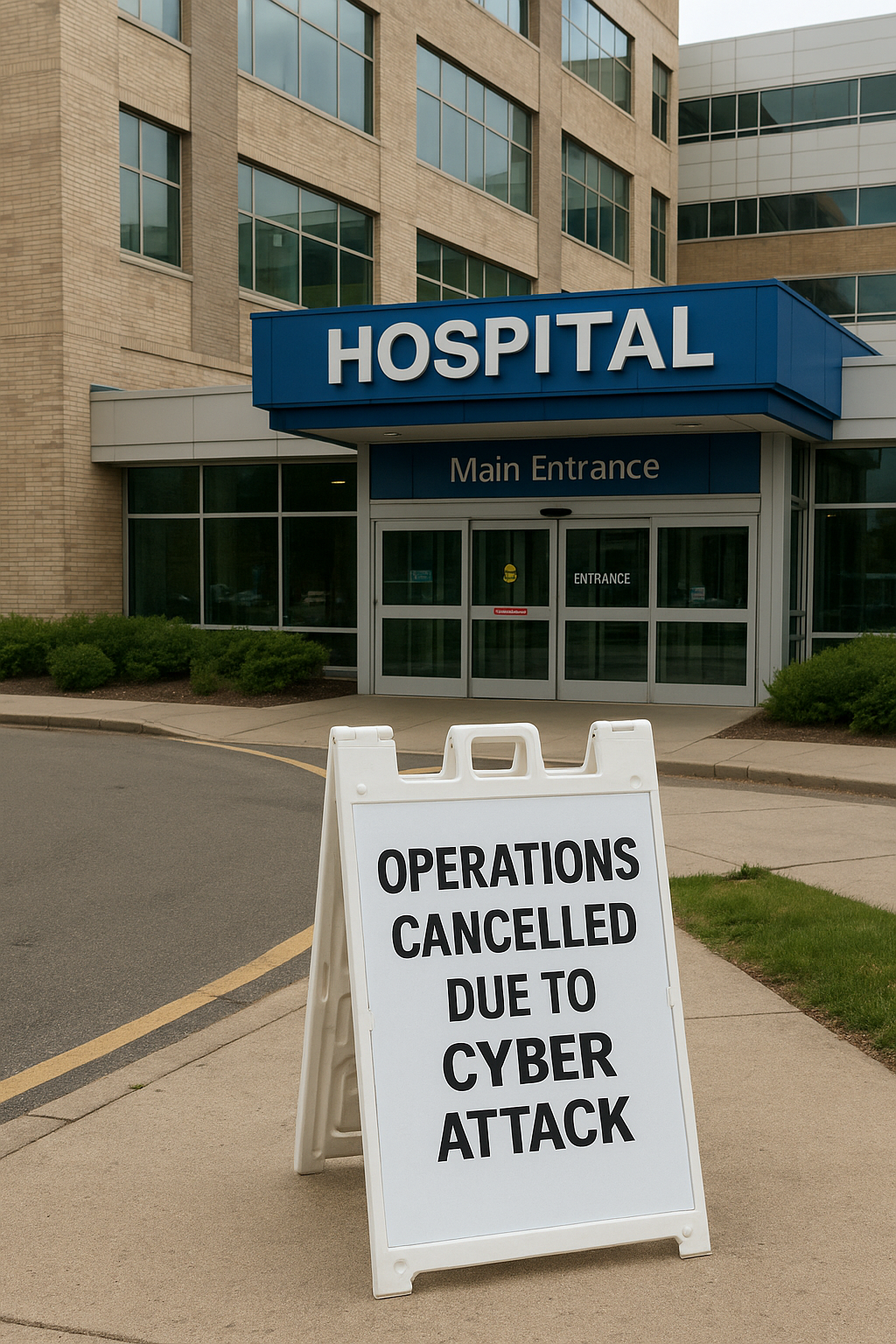
Fast-forward to 2025, and the stakes look very different. In June 2024 a pathology services provider was hit by ransomware; almost overnight, hospitals across London had to cancel blood tests and reschedule operations, costing the NHS an estimated £32.7 million and untold stress for patients and clinicians. Factories have ground to a halt because a cloud logistics platform went offline. Retailers have watched their tills fall silent when a third-party payments processor suffered a breach.
These incidents share two traits. First, the organisations directly affected were not the ones breached. Second, the real damage wasn’t a confidentiality violation but an operational standstill. Today, supply-chain cyber security is as much about keeping your business running as it is about protecting data.
From Confidentiality to Continuity
Three forces have pushed us to this new reality.
1. Hyper-connected ecosystems. Cloud apps, APIs and managed service providers now knit companies together into a single digital fabric. A vulnerability in one corner can tug at the whole weave.
2. Attacker economics. Criminal groups understand leverage: compromise one supplier and you inherit dozens, sometimes hundreds, of downstream victims. Ransomware gangs in particular relish that multiplier effect.
3. Rising regulatory pressure. Policymakers have responded by hard-wiring basic cyber hygiene into contracts and legislation. In the UK, Cyber Essentials, IASME Cyber Assurance and the new Defence Cyber Certification (DCC) appear in procurement frameworks, tender documents and even bank supplier policies, setting a minimum bar for technical controls that double as resilience measures—think timely patching, immutable backups and rehearsed incident response plans.
Together these trends mean procurement and security teams can no longer treat supplier assurance as an annual questionnaire exercise. They need living evidence that critical partners can withstand an attack and keep services flowing.
Certifications: A Practical Starting Point
No one has the bandwidth to audit every vendor in depth—and suppliers, particularly small ones, don’t relish filling out yet another bespoke spreadsheet. Independent certifications offer a pragmatic middle ground:
Cyber Essentials / Cyber Essentials Plus lay down five straightforward technical controls proven to block the majority of commodity attacks.
IASME Cyber Assurance adds governance, risk management and business-continuity clauses.
ISO 27001 provides internationally recognised comprehensive information security assurance.
DCC builds on Cyber Essentials for defence suppliers, layering further resilience obligations.
When a supplier presents an up-to-date certificate, you gain a measurable assurance that someone independent has checked the basics and will re-check them in twelve months. Certifications don’t solve everything, but they raise the floor quickly and fairly.
The Administrative Headache
Of course, knowing that certifications help and actually tracking them across dozens—or hundreds—of suppliers are two very different things. In practice many teams still wrestle with:
scattered spreadsheets and colour-coded cells;
suppliers left guessing about jargon-filled requirements;
a frantic rush before renewal deadlines;
dashboards that drift out of date within a week of publication
Enter Cyber Swift: Closing the Gaps, Not Just Highlighting Them

We built Cyber Swift to remove that friction. Developed by Cool Waters Cyber—an IASME Certification Body, NCSC-Assured Service Provider and Cyber Advisor—the platform turns supplier assurance into a living, end-to-end workflow.
Upload your supplier list, set the certification level each partner must reach, and Cyber Swift does the heavy lifting. Suppliers receive a co-branded portal with plain-English tasks, model answers and real-time support from our assessors. Progress appears instantly on your dashboard. If a supplier fails a control (say, enabling MFA for admin accounts), Cyber Swift provides step-by-step guidance and tracks completion. You see risks shrinking, not just red flags multiplying.
For many organisations the platform pays for itself in reclaimed time: fewer email chases, no duplicate questionnaires, and ready-to-download evidence when auditors or customers come calling. More importantly, it lifts the cyber resilience of your entire ecosystem—helping prevent the very outages and headlines that now keep boards awake at night.
Suppliers love it because if the opt into supply chain transparency, you can see their active certifications if they have already provided them for a different customer - saving everyone time and money.
MSP Partners Amplify the Effect
Managed Service Providers play a critical role, especially for smaller suppliers who lack internal IT teams. Cyber Swift lets MSPs offer the platform under their own branding, preload model answers that match their managed services and monitor every client’s certification journey from one screen. The result is faster compliance for suppliers, demonstrable value-add for MSPs and deeper assurance for you, the buying organisation.
Five Steps to a Stronger Supply Chain
Map your critical suppliers. Which companies could halt your operations if they went offline tomorrow?
Assign a certification baseline. Cyber Essentials for all, CE Plus or IASME Cyber Assurance for higher-impact vendors, DCC where contracts demand.
Invite suppliers via Cyber Swift. They start the journey immediately, with optional subsidy if tight deadlines loom.
Monitor real-time dashboards. Track compliance, remediation tickets and forthcoming renewals in one place.
Review and refine. Use the evidence packs for board updates, regulatory audits and continuous improvement.
Supply-chain cyber security has evolved. It’s no longer an annual ritual centred on lost data; it’s a live programme focused on keeping products rolling off the line and critical services online. With Cool Waters Cyber and Cyber Swift, you can embed that resilience across your supplier landscape—efficiently, collaboratively and in plain English.
Ready to see how it works?
Book a short demonstration (https://www.cool-waters.co.uk/lets-talk) or sign-up today at cyberswift.app.
If you’d like to talk strategy first, drop us a line at info@cool-waters.co.uk—we’re always happy to chat.